

Ultraviolet LED light source, which is the abbreviation of ultraviolet light emitting diode, is distinguished from the perspective of human health and environmental impact, we can divide the purple light into the following grades according to wavelength: UV (violet light): Visible light purple light (400-420nm )UVA (315~400nm), also known as long-wave violet light or "black light". ...
Ultraviolet LED Light Source, Also Short for Ultraviolet Light Emitting Diode, can be distinguished from the perspective of human health and environmental impact, we can divide the purple light into the following grades according to wavelength:
UV (purple light): Visible light purple light (400-420nm)
UVA (315~400nm), also known as long-wave Violet light or "black light".
UVB (280~315nm), also known as medium-wave violet.
UVC (200~280nm), also known as short-wave Violet or Germicidal Violet.
UVD: vacuum ultraviolet (100-200 nm)
Sunlight includes UVA, UVB, and UVC three bands of ultraviolet light, but due to the absorption of the ozone layer in the air, 99% of the ultraviolet light reaching the ground is in the UVA band.
Ultraviolet LED generally refers to the LED whose emission center wavelength is below 400nm, but sometimes called near-ultraviolet LED when the emission wavelength is greater than 380nm, and called deep-ultraviolet LED when the emission wavelength is shorter than 300nm. Ultraviolet LED (UV LED) is mainly used in the fields of biomedicine, anti-counterfeiting identification, purification (water, air, etc.), computer data storage and military. And with the development of technology, new applications will continue to appear to replace the original technology and products. UV LED has broad market application prospects. For example, UV LED phototherapy instrument is a very popular medical device in the future, but the current technology is still in Growth period.
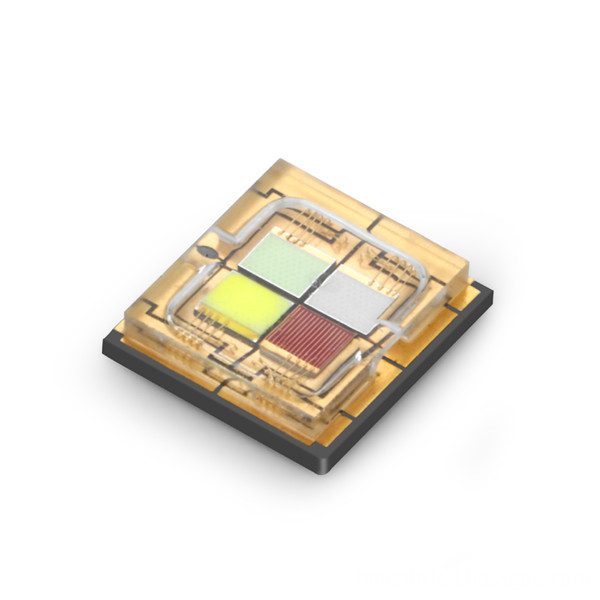
Ultraviolet LEDs are receiving widespread attention from lighting equipment manufacturers and liquid crystal display manufacturers. Because by using ultraviolet light and fluorescent materials that can convert ultraviolet light into red, green, and blue respectively, it is possible to realize a white LED with strong color reproducibility. Currently, most commercially available white LEDs use blue LEDs and phosphor materials that convert blue light into yellow light, and the red light component is relatively weak. A faint orange color appears when white light is irradiated on a red material. If you want to use it for backlighting, you have to think of a way on the color filter. But if it is a UV LED, these problems can be solved. However, since the luminous efficiency of UV LEDs is about half lower than that of products using blue LEDs, brightness has become a major issue for UV LEDs.
The above is about the dynamics of LED light source. If you want to know more news and developments of our company,
please click and browse our official website. Our company also sells UV Lights, UV LED Curing, UVC LED,
UV Germicidal Lamps, UV Curing and UV LED Packages.